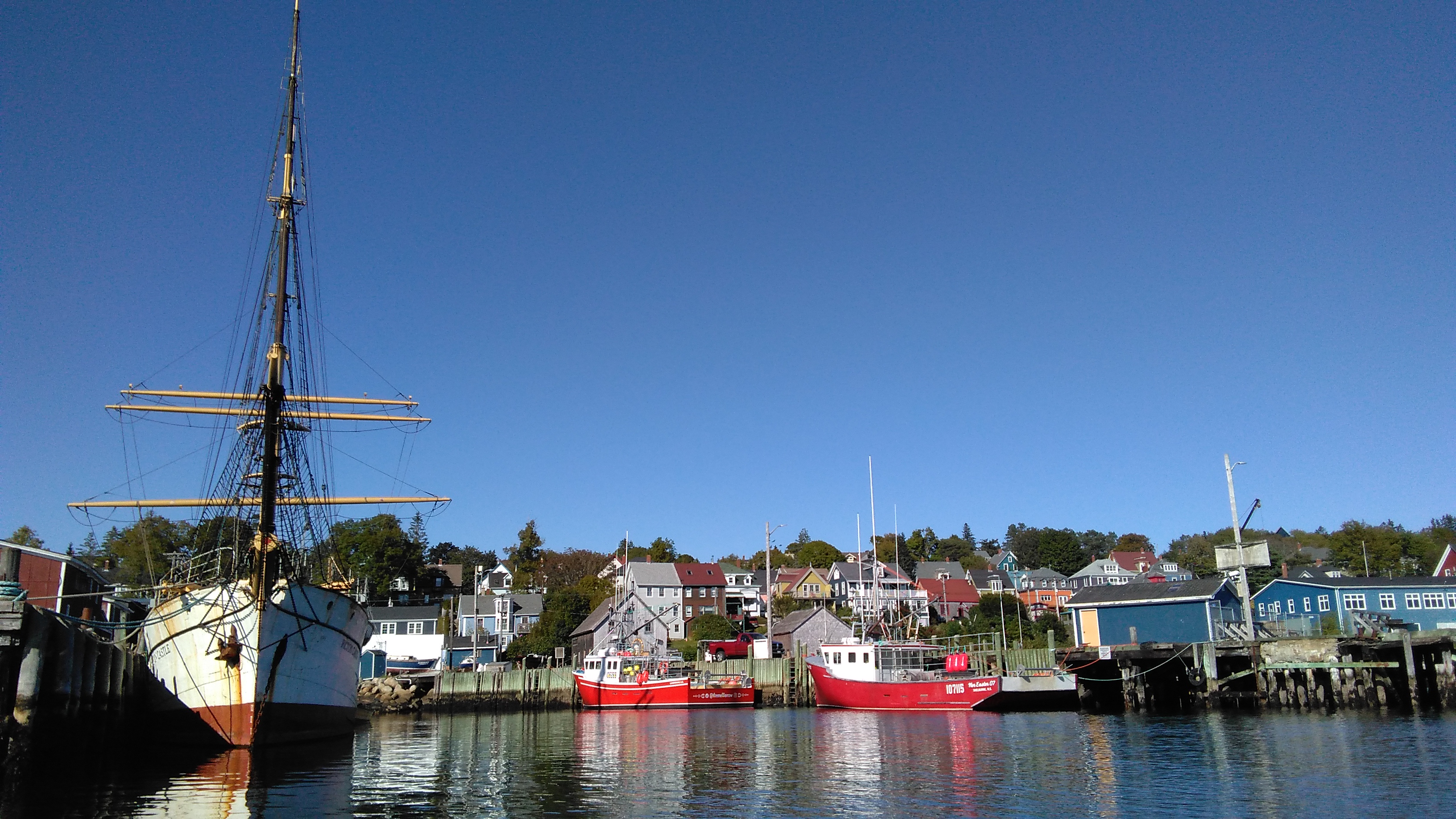
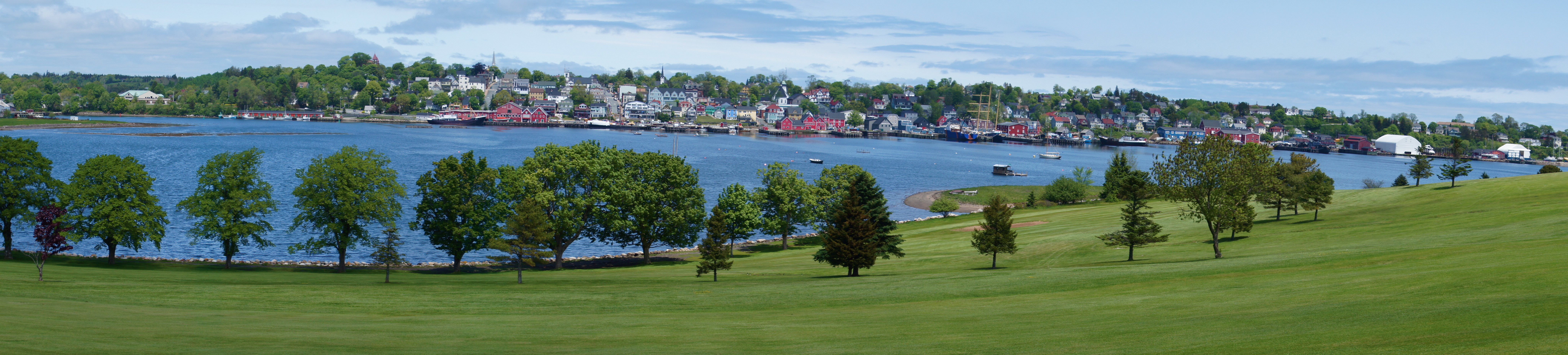
On the South Shore of Nova Scotia, approximately 90 kilometres southwest of Halifax, the town of Lunenburg occupies a narrow peninsula between two sheltered inlets. Its founding in 1753 was a deliberate colonial project: the British Board of Trade recruited Protestant settlers — primarily from the Rhine valley and the Swiss Confederation — to populate lands recently secured from France following the War of Austrian Succession. These settlers arrived with agricultural expectations; they would become shipbuilders and fishermen.
Founding and Early Settlement
The decision to site a settlement at Lunenburg reflected practical geography as much as colonial strategy. The harbour was deep and sheltered, capable of receiving ocean-going vessels without the silting problems that affected other potential sites along the South Shore. Timber was accessible from the surrounding hills. The adjacent coastline offered access to the rich fishing grounds of the Scotian Shelf.
The first generation of settlers adapted to a marine economy with notable speed. Within decades, Lunenburg families had established themselves in the Atlantic coastal trade, initially as crew aboard vessels owned by Halifax merchants, and subsequently as vessel owners themselves. The construction of fishing and trading schooners became a primary industry in Lunenburg — work that required both skilled craftsmen and a steady supply of local timber.
UNESCO designation: The Old Town of Lunenburg was designated a UNESCO World Heritage Site in 1995. The designation recognized the town's exceptionally well-preserved example of a planned British colonial settlement, with an original street grid and building stock largely intact. UNESCO's inscription documentation is available through the World Heritage Centre at whc.unesco.org.
The Schooner Economy
The wooden schooner — a two-masted sailing vessel with fore-and-aft rigging that allowed it to sail efficiently close to the wind — became the characteristic vessel of Lunenburg's offshore fishery. These vessels carried large dories in stacked pairs aboard deck. At the fishing grounds, dories were launched, each crewed by one or two fishermen who hand-lined for cod. At the end of the day, the dories returned to the schooner with their catch, which was split, salted and packed in the hold.
This system — the two-man dory with hand-lines, fishing from a mothership schooner — was refined and standardized through the 19th century. It was a labour-intensive method that required seamanship in exposed conditions, often in fog and unpredictable weather. The hazards were real: dory fishermen separated from their schooner by sudden fog or wind shifts were in serious danger, and losses were documented regularly in the records of Lunenburg County churches and municipal records.
The Bluenose and Racing Heritage
The most recognizable symbol of Lunenburg's schooner tradition is the Bluenose, a fishing schooner launched from the Smith and Rhuland shipyard in Lunenburg in 1921. The vessel was designed by William J. Roué and built for both fishing and racing — she participated in the Halifax Herald International Fishermen's Trophy competition that pitted Canadian and American fishing schooners against one another in races off the Nova Scotia coast.
The Bluenose won the Trophy in 1921 and successfully defended it through multiple subsequent competitions, acquiring a reputation as the fastest fishing schooner in the North Atlantic fleet. The vessel's profile was incorporated into the Canadian dime in 1937, where it remains. The original Bluenose was lost off Haiti in 1946. A replica, Bluenose II, was built at the Smith and Rhuland yard in 1963 and serves as Nova Scotia's sailing ambassador, based in Lunenburg.
The Fisheries Museum of the Atlantic
Lunenburg's position in the history of the Atlantic fishery is documented at the Fisheries Museum of the Atlantic, operated by the Nova Scotia Museum network and located on the waterfront. The museum holds collections related to the schooner fishery, including vessel artifacts, photographic records, and documentation of the fishing families and communities that shaped Lunenburg County's economy through the 19th and 20th centuries.
The museum's waterfront site includes historic vessels, including a retired side-trawler that represents the transition from the dory and schooner system to the mechanized offshore fishery of the mid-20th century. This transition — from wind-powered schooners working with hand-lines to diesel trawlers pulling large nets — reshaped both the economics and the labour patterns of Lunenburg's fishing industry.
Architecture and Urban Form
The UNESCO designation of Lunenburg's Old Town is grounded in the integrity of its built environment. The original 1753 survey laid out a rectangular grid of streets on the peninsula, with a parade ground and church lot established on the ridge overlooking the harbour. This plan, with modifications accumulated over nearly three centuries, is still readable in the town's present street network.
The buildings that populate this grid include wooden structures dating from the 18th century alongside 19th and early 20th century residential and commercial buildings. The characteristic Lunenburg style involves dormered facades, sometimes with the distinctive "Lunenburg bump" — a projecting windowed dormer over the front door that appears in various forms across many of the town's older houses. The origin of this architectural element is debated, but it appears frequently enough to be considered locally distinctive.
The Contemporary Town
Lunenburg today functions as a small town of a few thousand residents with a mixed economy. Boat-building and repair continue at the waterfront, where yards work on both wooden and fiberglass vessels. Tourism has grown substantially since the UNESCO designation, with the waterfront and Old Town serving as the primary draw for visitors from within Canada and internationally.
The tension between heritage preservation and ongoing use is a recurring subject of municipal discussion. Buildings in the UNESCO core require careful management to maintain the values cited in the World Heritage designation, while owners and residents navigate the practical demands of maintaining older wooden structures. The municipality works within a heritage planning framework that draws on provincial and federal guidance for World Heritage Site management.